You wash it after every use. You scrub it carefully. You might even use hot water and soap.
But here’s what no one in the kitchenware industry wants you to know:
Your cutting board is still filthy.
And worse—it’s actively contaminating every single meal you prepare for your family.
Dr. Sarah Chen, PhD in Food Microbiology at Cornell University, recently conducted a study that shocked even veteran food scientists:
“We tested 200 household cutting boards from families who described themselves as ‘very clean.’ The results were horrifying. Over 70% harbored dangerous bacterial colonies deep within the material—colonies that survived washing, scrubbing, even dishwasher cycles. In many cases, these boards were dirtier than the family’s toilet seat.”
And Dr. Chen isn’t alone. Kitchen safety experts worldwide are now breaking their silence about what they call “The Porosity Trap”—and the contamination crisis hiding in plain sight on kitchen counters across the USA.
The Industry Secret They’ve Been Hiding
For decades, we’ve been told that wooden cutting boards are “traditional” and “natural.” That plastic boards are “affordable” and “convenient.”
What they didn’t tell us is that both materials are fundamentally, scientifically flawed.
Here’s why:
The Porosity Trap: Your Board’s Hidden Enemy
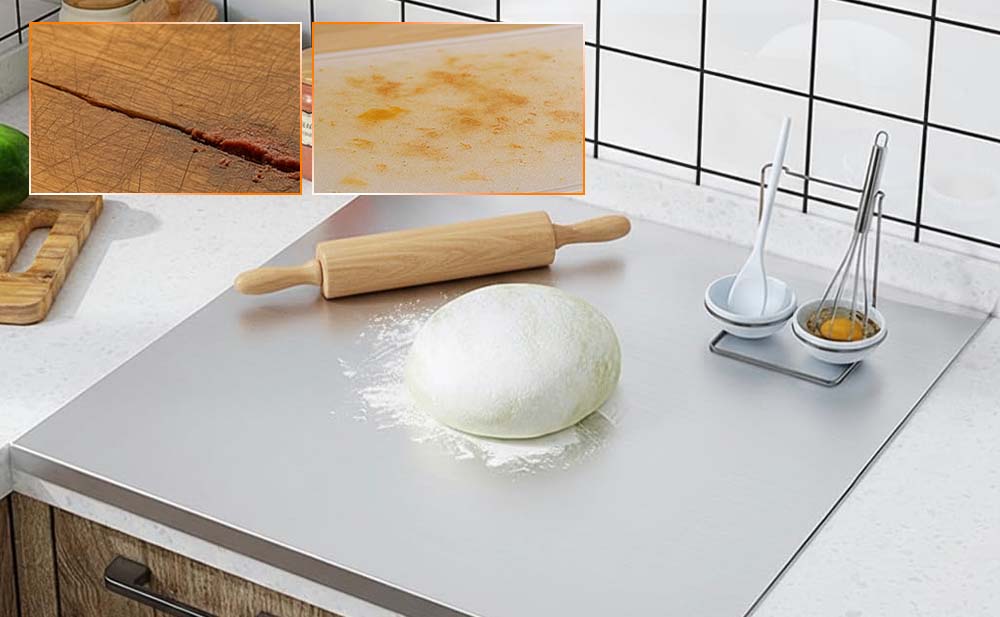
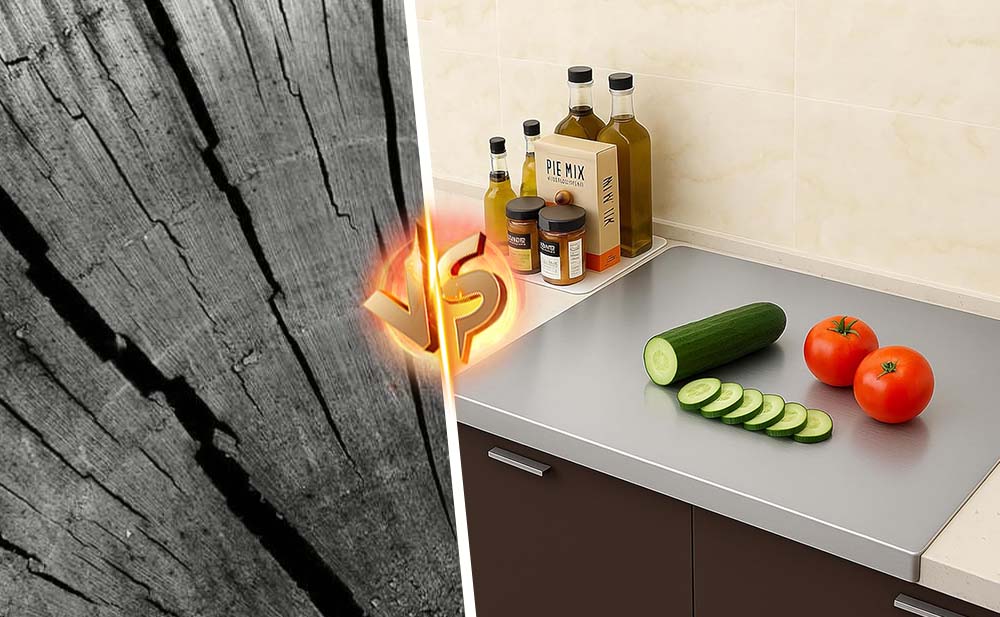
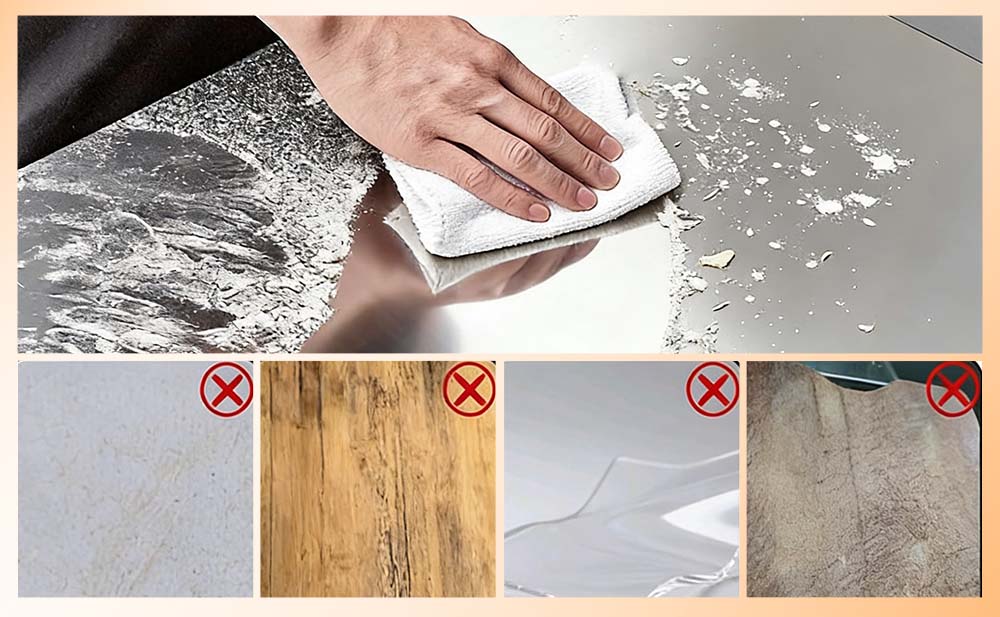
Wood is organic. It’s porous. Under a microscope, you can see thousands of microscopic tubes running through the grain—tubes that literally drink up the juices, oils, and bacteria from everything you cut.
Plastic isn’t much better. Every knife cut creates a micro-canyon—tiny grooves that become permanent homes for bacteria.
And here’s the terrifying part:
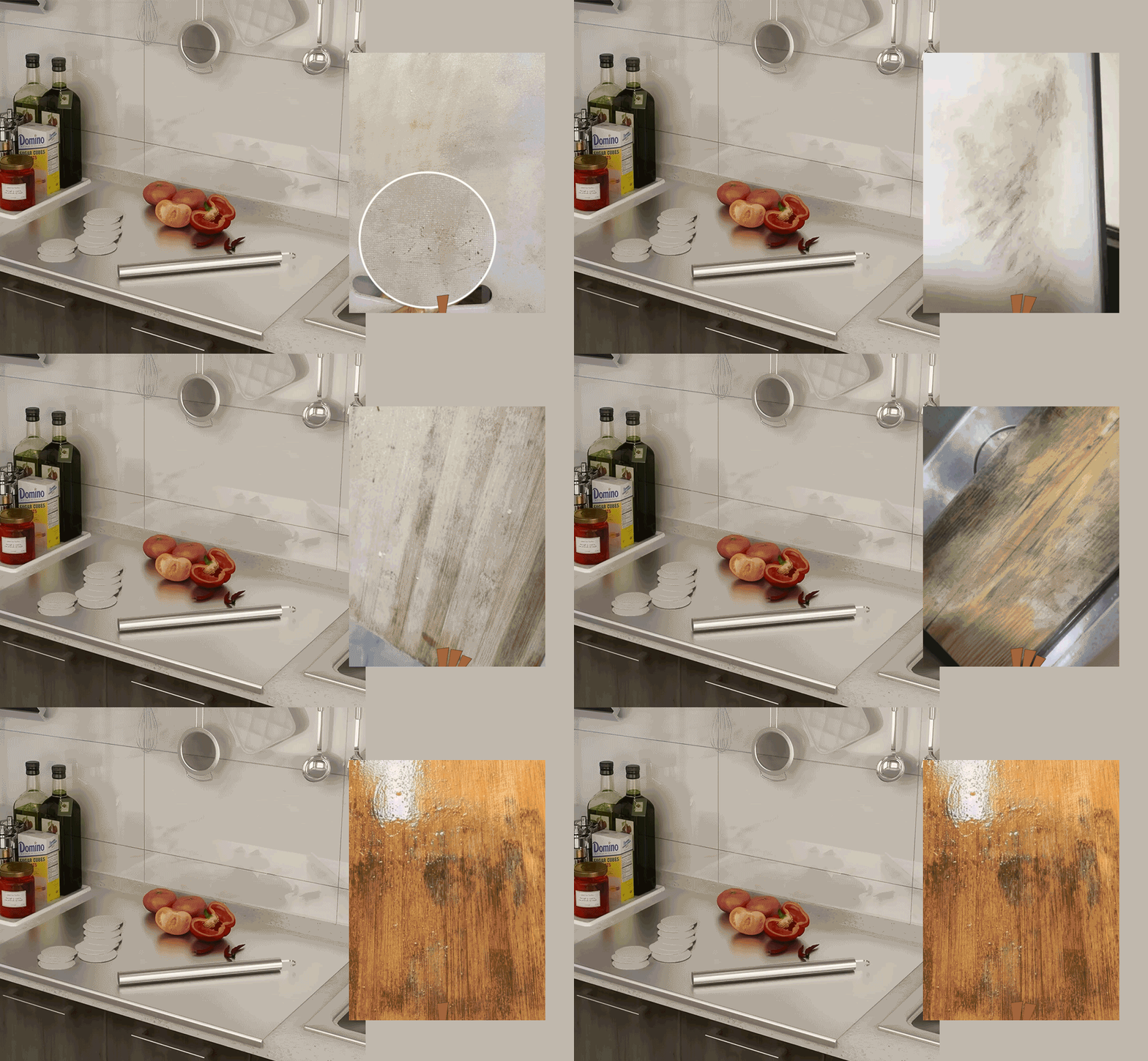
Once bacteria enter these pores or canyons, they create something called a biofilm—a protective slime layer that regular washing can’t penetrate. That’s why your board smells strange 20 minutes after you’ve “cleaned” it.
It’s not dirty on the outside. It’s rotting from the inside.
You’re essentially preparing dinner on a petri dish.
The Microplastic Crisis No One Is Talking About
But bacterial contamination isn’t the only threat.
A groundbreaking 2024 study published in Environmental Science & Technology revealed something even more disturbing:
Every time you chop on a plastic board, you’re adding microplastics directly into your food.
The research found that a single chicken dinner prepared on a worn plastic board can introduce up to 50,000 microplastic particles into your meal.
Let that sink in for a moment.
Those particles? They’re now part of your family’s dinner. Studies are increasingly linking microplastic consumption to hormone disruption, immune system issues, and long-term health consequences we’re only beginning to understand.
Dr. Michael Torres, environmental health researcher, puts it bluntly:
“When you use a plastic cutting board, you’re not just preparing food. You’re making plastic an ingredient.”
The Three Deadly Mistakes You’re Making Right Now
Mistake #1: Believing “Clean-Looking” Means “Actually Clean”
Visual cleanliness and sanitary safety are not the same thing. That freshly washed wooden board? Studies show it can harbor 200% more bacteria than a toilet seat.
Mistake #2: Replacing Your Board Every Six Months
Many families think the solution is buying new plastic boards regularly. But even a brand-new plastic board starts accumulating bacteria-hiding scratches after the first week of use. You’re not solving the problem—you’re just restarting it.
Mistake #3: Using Harsh Chemicals to “Deep Clean”
Bleach solutions and harsh cleaners can kill surface bacteria, but they can’t penetrate the biofilm deep in the material. Plus, those chemicals can leach into your food during the next use.
The real question is: Why are we using materials that require this much maintenance just to be “safe”?
The Professional Secret: What Restaurant Kitchens Know
Walk into any professional kitchen—Michelin-starred restaurants, catering companies, food processing facilities—and you’ll notice something immediately:
No wooden boards. No plastic boards.
Everything is stainless steel.
Why?
Because professional chefs and food safety inspectors know what home cooks are just discovering:
Stainless steel doesn’t play host to bacteria. It has zero porosity. Zero hiding places. Zero buildup.
But until recently, restaurant-grade stainless steel cutting boards were either massive, industrial pieces or prohibitively expensive for home use.
That’s finally changed.
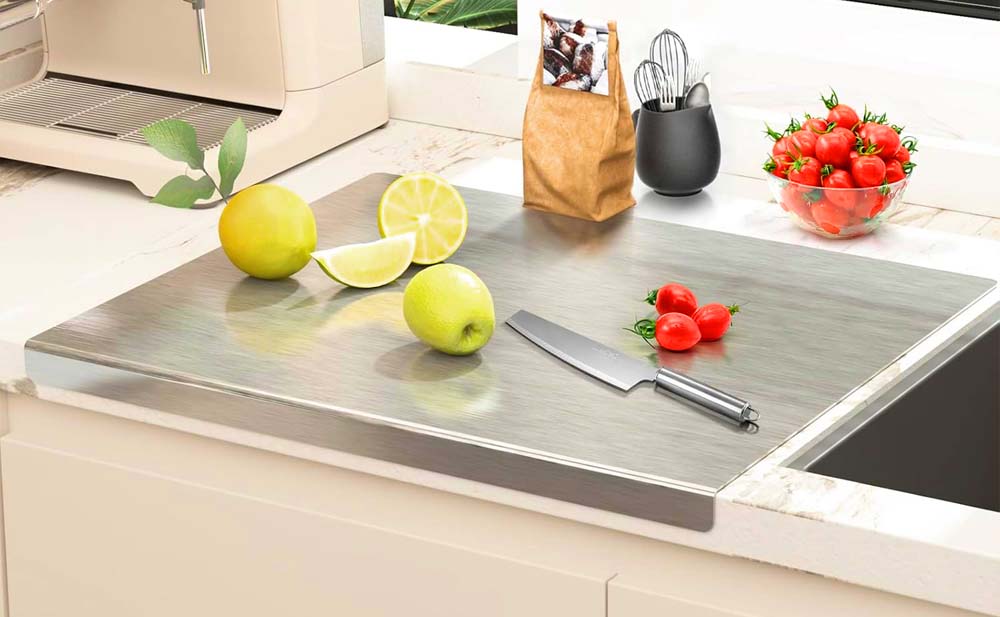
Introducing: The Stainless Steel Kitchen Cutting Board
A U.S.A.-based kitchenware company has engineered something revolutionary: a premium-quality, restaurant-grade stainless steel cutting board designed specifically for home kitchens—at a fraction of the cost of high-end alternatives.
This isn’t just a cutting board. It’s what food scientists call “The Immortal Surface”—a preparation tool that will never degrade, never harbor bacteria, and never contaminate your food.
How Does It Work?
The board is constructed from high-grade passivated stainless steel. This creates what’s known as Non-Porous Technology.
Here’s what that means in plain English:
Zero Porosity = Zero Bacterial Hiding Places
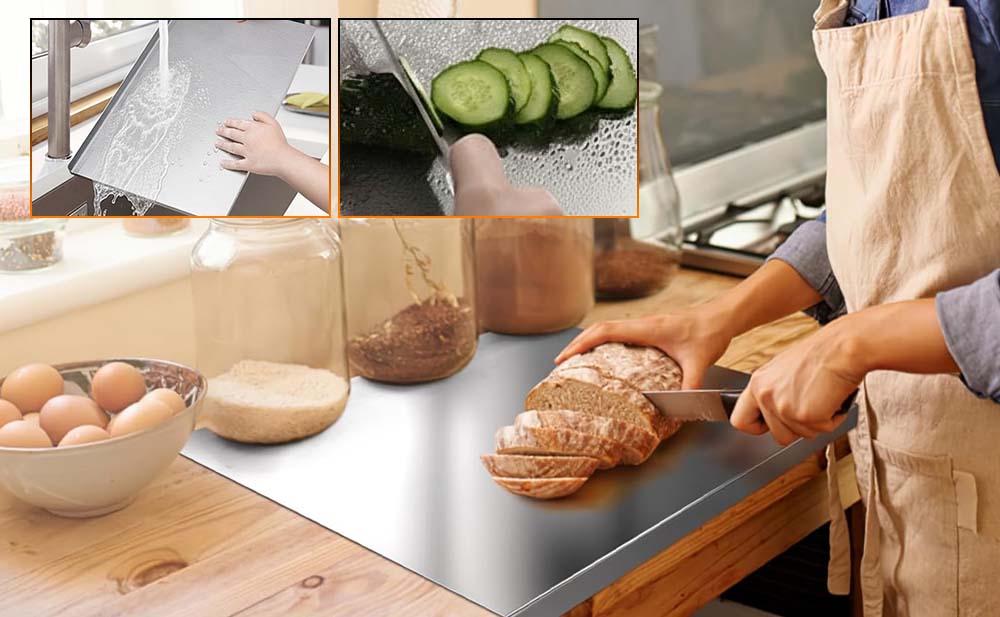
Unlike wood (which drinks up bacteria) or plastic (which hides bacteria in scratches), the surface is impenetrable. Bacteria sit exposed on the surface, where a simple rinse washes them completely away.
Chromium Oxide Deodorization
Here’s something incredible: The steel itself neutralizes odors chemically.
When sulfur molecules (the source of garlic, onion, and fish smell) touch the chromium in the steel, they bind to it and are neutralized instantly. It’s the same principle behind “stainless steel soap” bars—except your entire cutting surface becomes a deodorizer.
Cut garlic. Rinse the board. Immediately cut strawberries. Zero flavor transfer.
Temperature Resistant & Indestructible
The 0.15 cm fortified steel construction means:
· Won’t crack, warp, or chip—ever
· Handles hot pots straight from the stove
· Accelerates defrosting of frozen foods (metal conducts temperature)
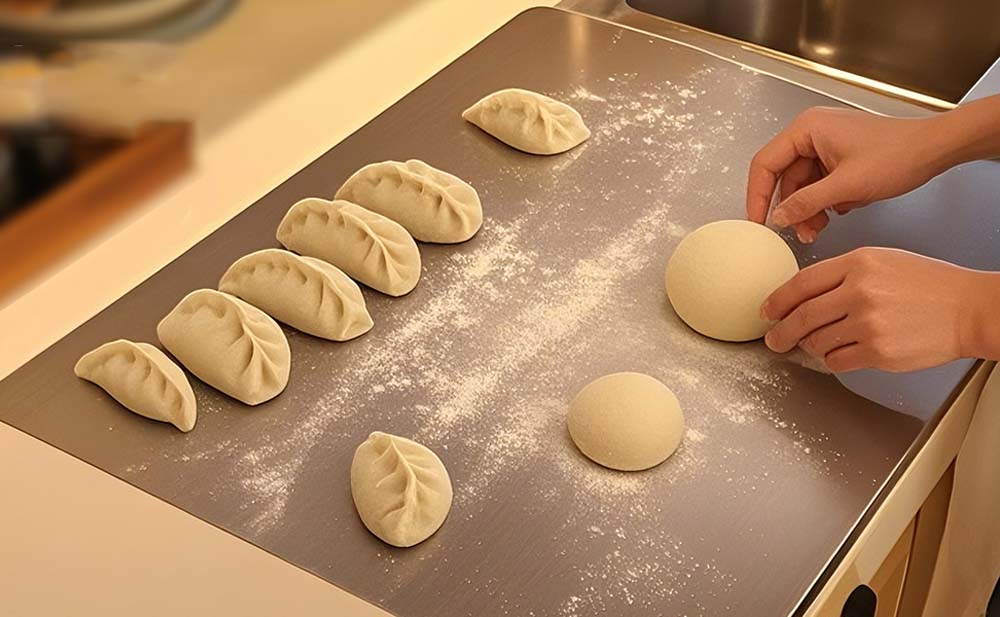
· Stays cool while kneading dough (essential for pastry work)
Real People, Real Results
Margaret L.: “I was skeptical about cutting on metal, but this board changed everything. I used to replace my plastic boards every few months because they’d get so stained and gross. This board? Six months later, looks brand new. I can literally see the difference when I rinse it—everything just slides off. My husband, who never notices kitchen stuff, actually commented on how good the vegetables taste now.”
David K.: “As someone who does a lot of raw meat prep (I hunt), this board is a game-changer. I used to stress about cross-contamination with my old wooden board. Now? Rinse, wipe, done. My wife loves that it doesn’t stink like my old board used to after prepping fish. Total peace of mind.”
Chen F.: “I’m a pastry baker, and this board is PERFECT for dough work. The metal stays naturally cool, so my butter doesn’t melt while I’m rolling. Plus, cleanup is instant—no more scraping dried dough out of wood grain. Worth every penny.”
Six Reasons Families Are Making the Switch
1. Surgical-Grade Sanitation at Home
The smooth, non-porous surface ensures complete bacterial removal with a simple rinse. No scrubbing grooves. No wondering if it’s “clean enough.” Dishwasher safe for effortless deep cleaning.
2. Odor-Free, Flavor-Pure Food Prep
Thanks to chromium oxide chemistry, strong-smelling foods (garlic, onions, fish) leave zero trace. Your apple slices will never taste like last night’s salmon again.
3. Built to Outlast Your Kitchen
Resistant to scratches, cracks, warping, and staining. This is genuinely the last cutting board you’ll ever need to buy. Compare that to replacing plastic boards 2-3 times per year for a decade.
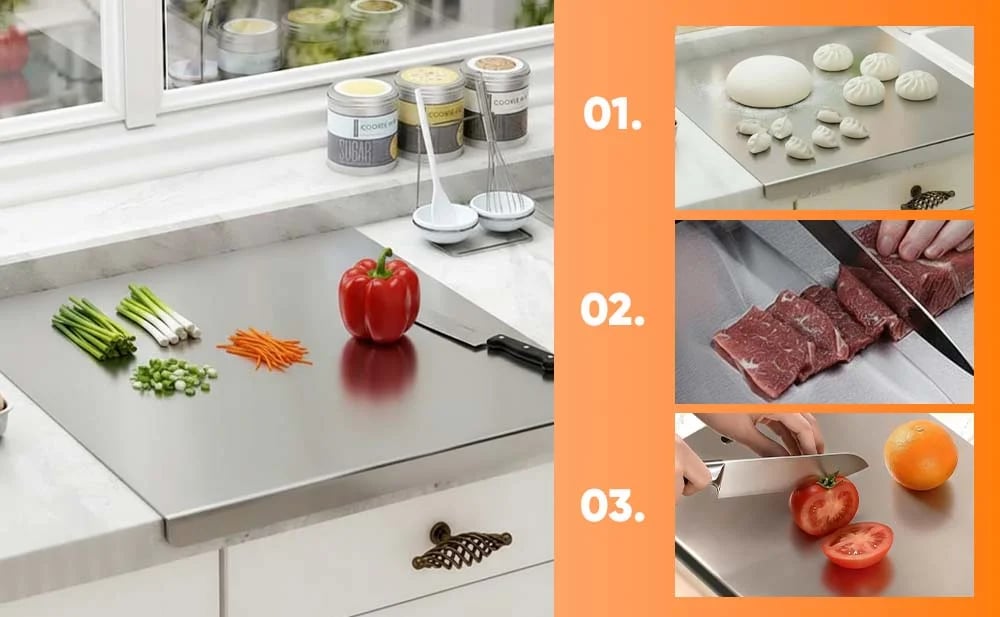
4. Professional Versatility
Perfect for:
· Raw meat prep (zero bacterial absorption)
· Vegetable chopping (no flavor contamination)
· Pastry and dough work (naturally cool surface)
· Sink cover (creates extra counter space in small kitchens)
· Outdoor cooking (won’t absorb BBQ sauce or marinades)
5. Knife-Friendly Brushed Finish
Worried about dulling your knives? The features a specially engineered brushed finish—smooth enough to protect knife edges, textured enough to provide cutting traction. Plus, the stability silicone pads prevent slipping during heavy chopping.
6. Space-Saving, Clutter-Free Storage
At just 0.15 cm thick, this slim profile slides easily into cabinets or drawers. Weighs less than bulky wooden butcher blocks but delivers superior performance.
How Much Is Peace of Mind Worth?
Here’s what most people don’t realize:
If you’re buying “cheap” plastic cutting boards at $8-12 each and replacing them every 4-6 months (which you should, for safety), you’re spending $16-36 per year.
Over 10 years? $160-360 on disposable boards that are contaminating your food the entire time.
The Stainless Steel Cutting Board is currently on sale for just $43.99 (regularly £87.99—that’s 50% off).
One-time payment. No replacements. No subscriptions. No hidden costs.
What Are You Waiting For?
Your family deserves food that’s truly clean—not just “looks clean.”
You deserve a kitchen tool that makes your life easier, not one that requires constant worry and maintenance.
And you definitely deserve to stop unknowingly serving microplastics and bacteria with every meal.
The Stainless Steel Cutting Board is the professional solution that finally makes surgical-grade sanitation accessible to home cooks.